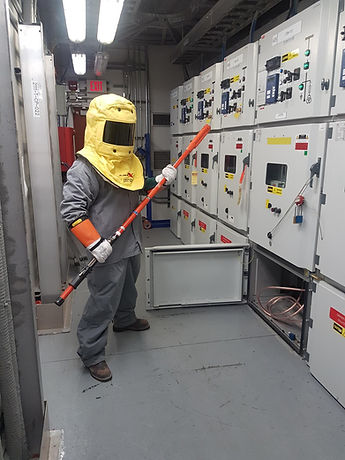
DC Arc Flash Studies for Battery Systems
BPS Engineering specialises in DC arc flash analysis for battery systems used in mining, mobile equipment, rail, marine, and battery energy storage systems (BESS).
We provide engineering-based arc flash studies for lithium-ion battery systems, HV DC distribution, energy storage systems, and mobile plant electrification projects.
Applications include:
-
Battery Energy Storage Systems (BESS)
-
Mining and off-highway equipment
-
Rail and transport systems
-
Marine battery systems
-
Hybrid and electric mobile machinery
-
Industrial HV DC systems

Why DC Arc Flash Requires Specialised Analysis

Battery-based DC systems commonly present unique challenges including:
-
High fault current capability
-
Temperature and soc dependant incident energies
-
Parallel battery strings
-
Fuse and contactor coordination
-
Arc sustainability
-
Enclosed “arc-in-a-box” conditions
-
HV mobile equipment constraints
DC battery systems behave differently to traditional AC power systems. Lithium-ion battery systems with low internal resistance can source extremely high current, increasing the risk of prolonged arc duration and high incident energy exposure.
BPS Engineering specialises in these DC-specific hazards and applies engineering-based assessment methods suited to battery energy storage and mobile electrification systems.
Industries We Support
Mining and Mobile Equipment
HV battery systems for underground mining equipment, haul trucks, drills, loaders, and hybrid machinery.
Battery Energy Storage Systems (BESS)
Containerised and industrial-scale battery systems including HV DC distribution and maintenance risk assessment.
Rail Applications
DC traction and onboard energy storage systems.
Marine Electrification
Hybrid and battery-electric marine propulsion and auxiliary
systems.
Industrial Battery Systems
Custom HV DC systems used in industrial and research
applications.


Typical Deliverables
Our DC arc flash studies may include:
-
Incident energy calculations
-
PPE recommendations
-
Arc flash boundary determination
-
Protection device assessment
-
Fuse and contactor coordination review
-
HV battery architecture review
-
Warning label recommendations
-
Engineering report documentation
Where applicable, studies may consider:
-
Open-air arc conditions
-
Arc-in-a-box conditions
-
Battery fuse clearing behaviour
-
Contactor isolation strategies
-
Maximum power point methodologies
-
Working distances and maintenance tasks
Arc Flash PPE Categories
DC arc flash studies are used to determine the incident energy exposure level and required PPE category as per NFPA 70E for maintenance and diagnostic tasks performed on energised systems.